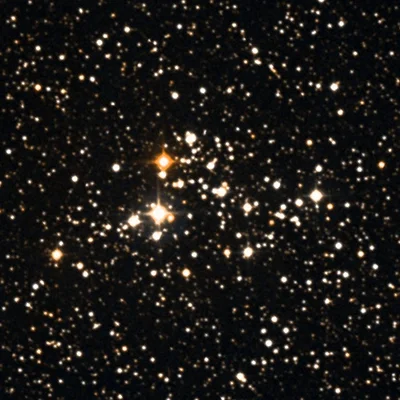
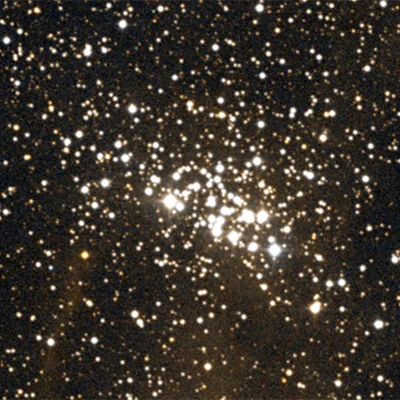
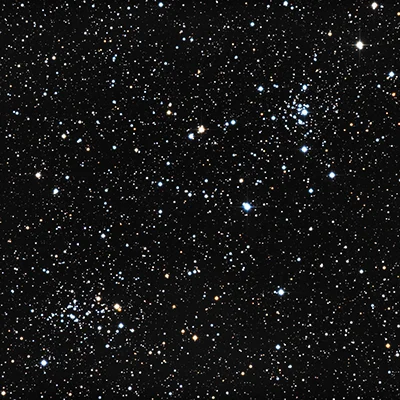
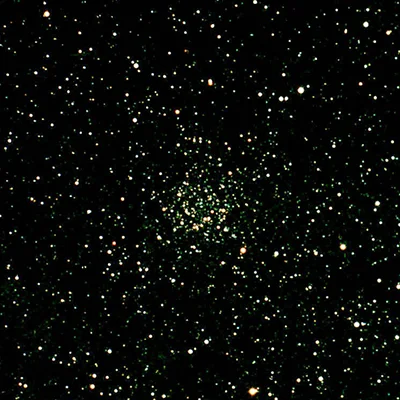
Open Cluster NGC 7686
History
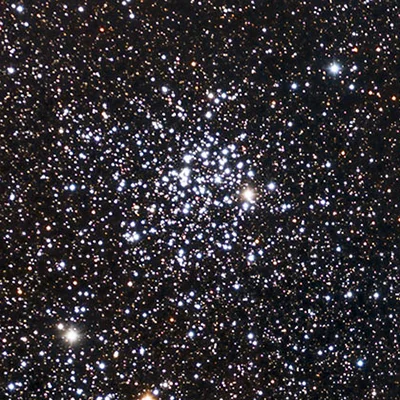
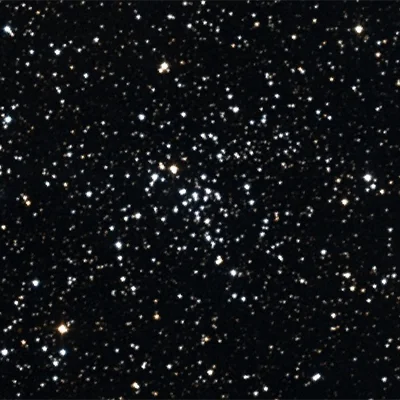
The open cluster NGC 7686 was discovered on 3 December 1787 by William Herschel. He recorded it as VIII 69 and noted: «A coarsely scattered cluster of pretty large stars. Contains one 8m in the south following part.» [464] His son John observed it three times and listed it as. On 14 September 1829 he wrote following notes: «A bright coarse cluster 7' diam; seen in full moonlight. Place of the chief star = 7m; about a dozen 9...11m, and many 12...14m.» [466]
Physical Properties
| Designation | NGC 7686 |
| Type | OCL (IV1p) |
| Right Ascension (J2000.0) | 23h 30m 07.3s |
| Declination (J2000.0) | +49° 08' 03" |
| Diameter | 15 arcmin |
| Visual magnitude | 5.6 mag |
| Metric Distance | 1.534 kpc |
| Dreyer Description | Cl, P, lC, st 7…11 |
| Identification, Remarks | WH VIII 69; h 2249; GC 4976; OCL 251 |
Finder Chart
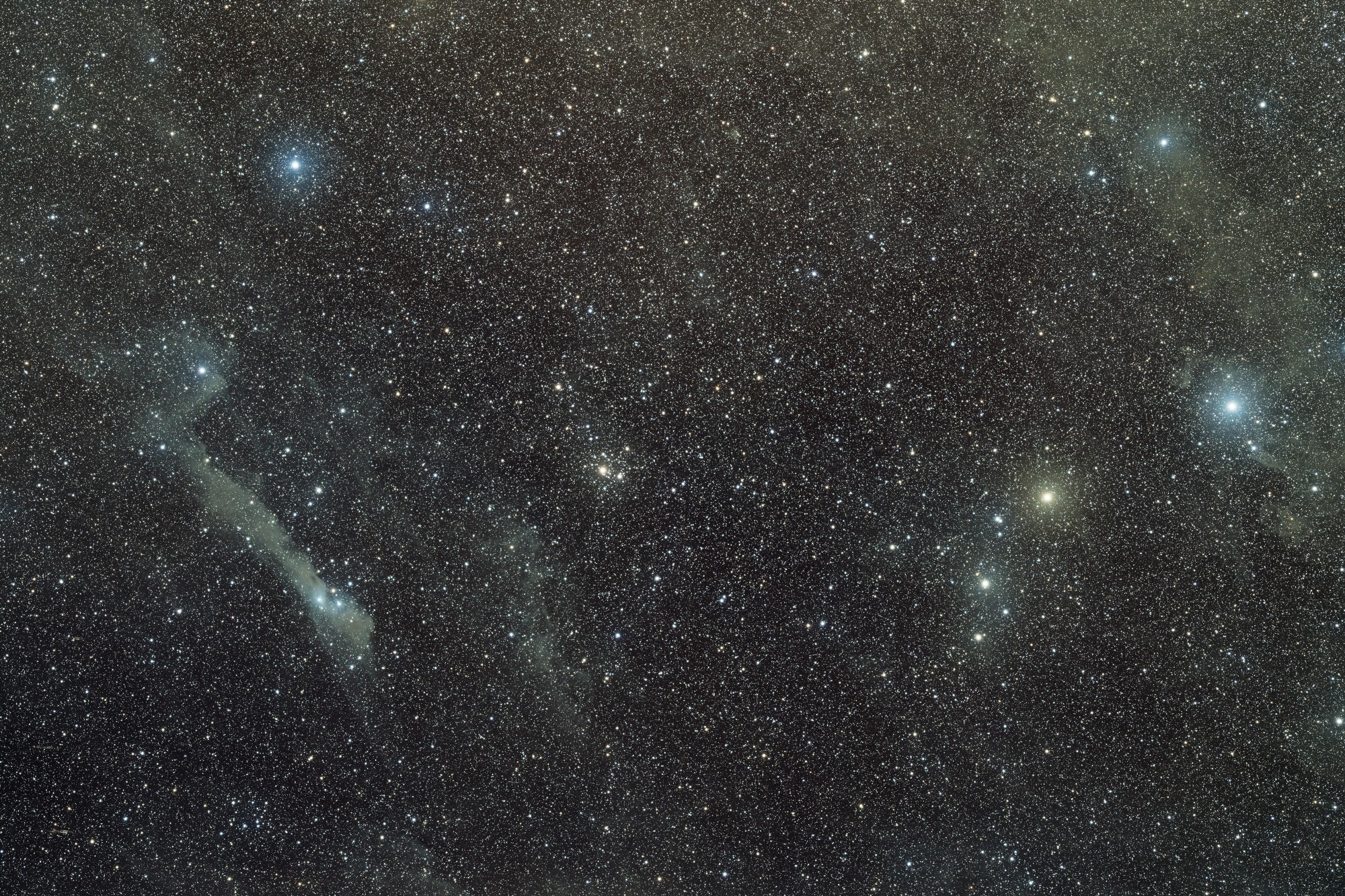
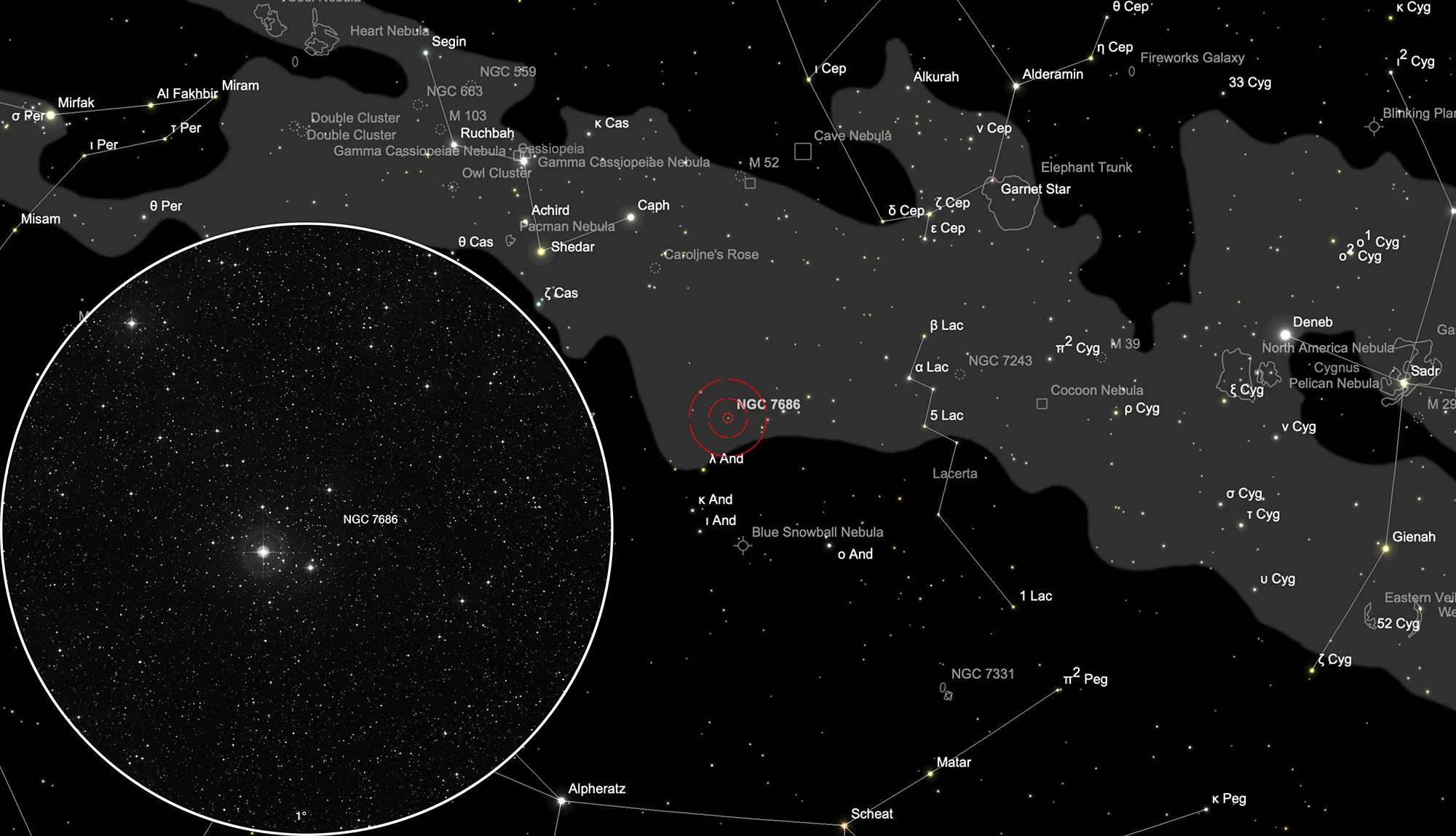
The open cluster NGC 7686 is located in the constellation Andromeda. On 14 September it is in opposition to the Sun and hence culminates at local midnight. The best viewing time is in the months May to February.
Visual Observation
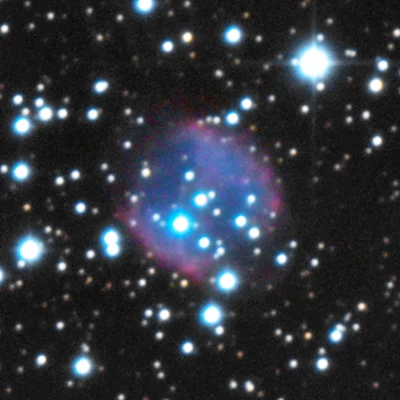
400 mm Aperture: The open cluster NGC 7686 appears merely as a conspicuous, sharply pointed triangle of brighter stars, enclosing a loose group of smaller stars. Overall, however, the whole formation stands out rather poorly against the relatively star-rich Milky Way background. As expected, nothing of the reflection nebula LBN 534 can be discerned visually. — 400 mm f/4.5 Taurus Dobsonian, Falera, 11. 9. 2026, SQM-L 21.2, little windy, Bernd Nies