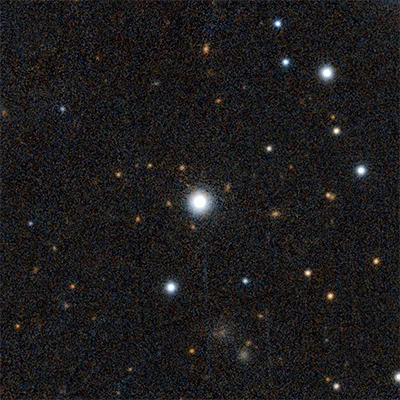
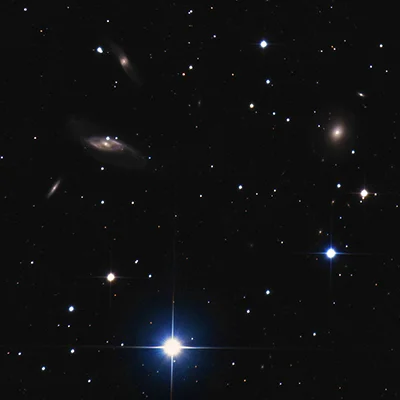
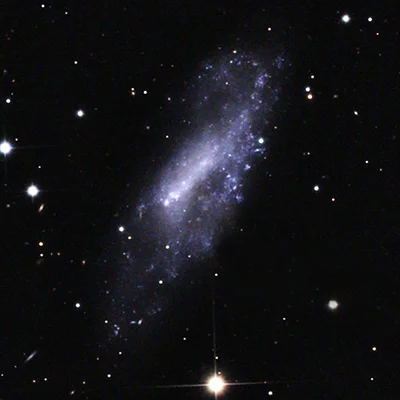
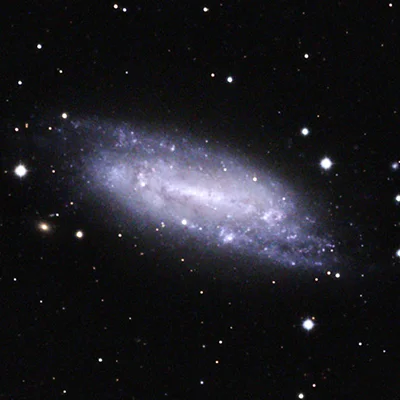
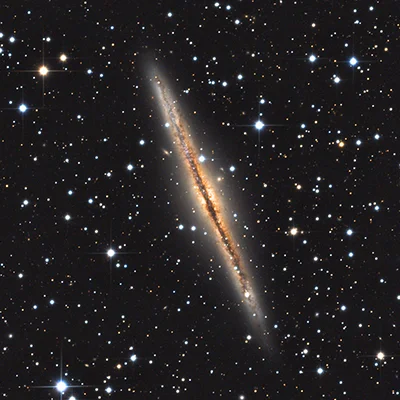
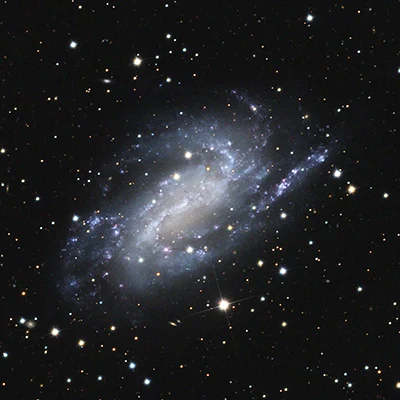
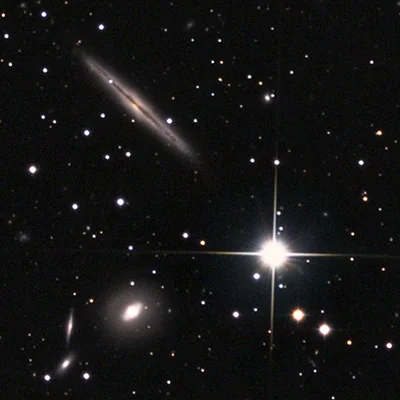
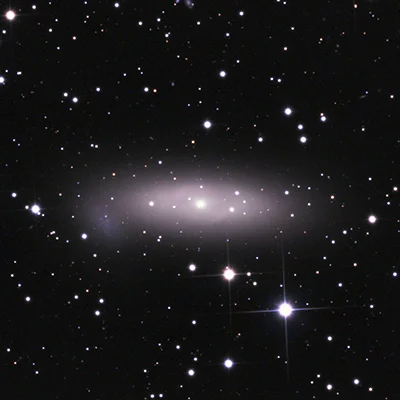
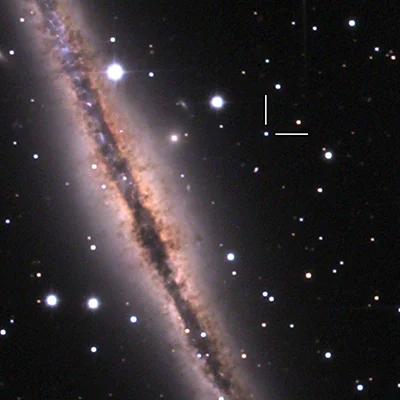
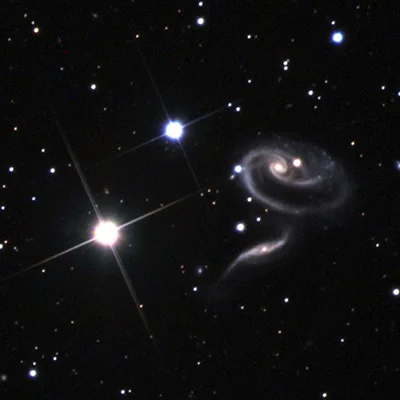
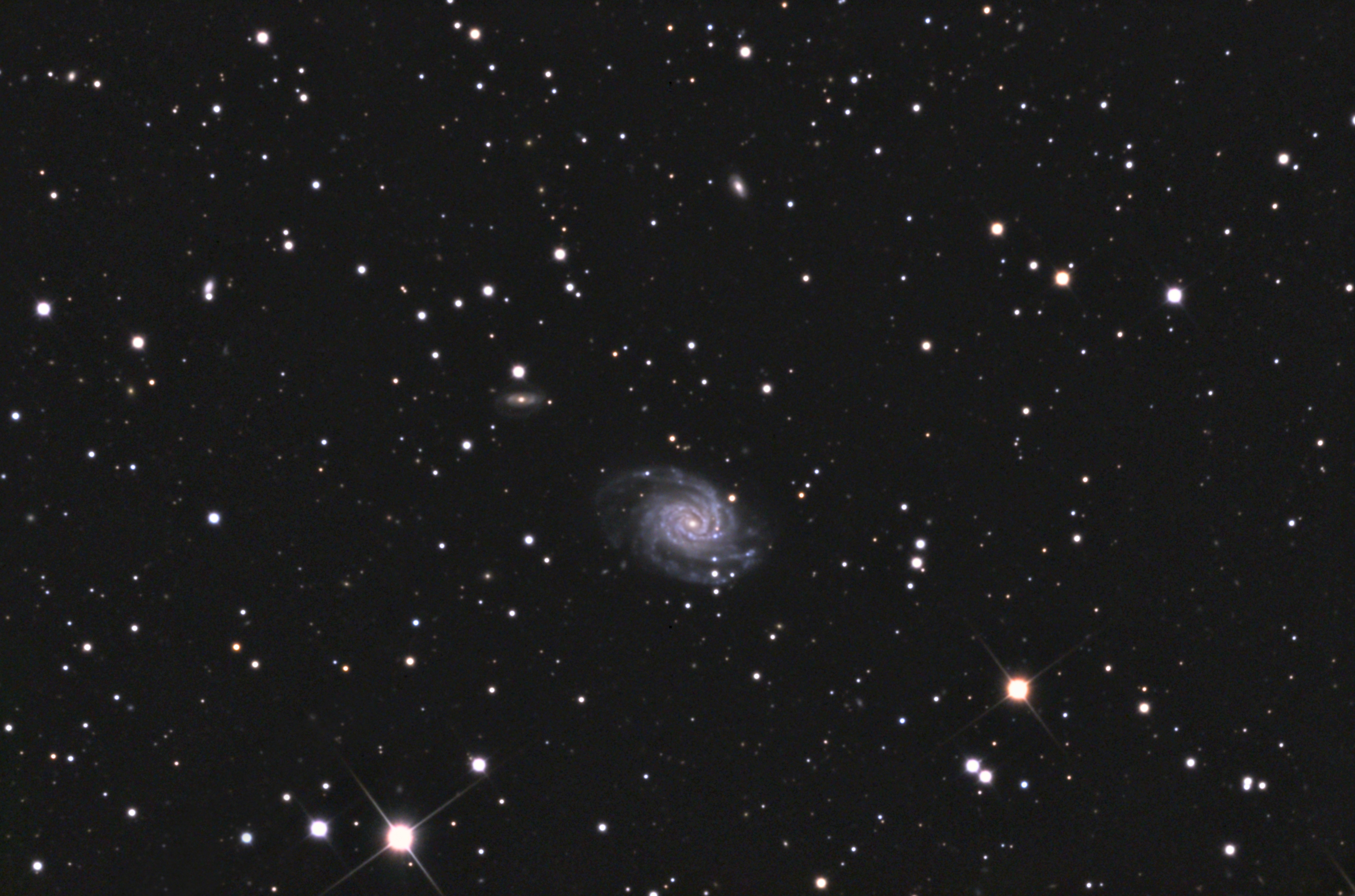
Galaxy NGC 753
History
The two galaxies NGC 753 and NGC 759 were discovered by Heinrich d'Arrest on 16 and 17 September 1865 with the 11-inch refractor at Copenhagen. For NGC 753 he noted a mag 13-14 star followed by 17 seconds of time and measured an accurate position (2 nights). His single position for NGC 759 matches UGC 1440 = PGC 7397. [364]
Physical Properties
| Name | RA | Dec | Type | bMag | vMag | B-V | SB | Dim | PA | z | D(z) | MD | Dreyer Description | Identification, Remarks |
|---|---|---|---|---|---|---|---|---|---|---|---|---|---|---|
| NGC 753 | 01 57 42.4 | +35 54 57 | Gx (SBbc) | 13.0 | 12.3 | 0.7 | 13.9 | 3 × 1.9 | 125 | 0.016355 | 69.08 | 53.730 | pB, pL, R, gmbM | GC 5201; UGC 1437; MCG 6-5-66; CGCG 522-86; IRAS 01547+3540 |
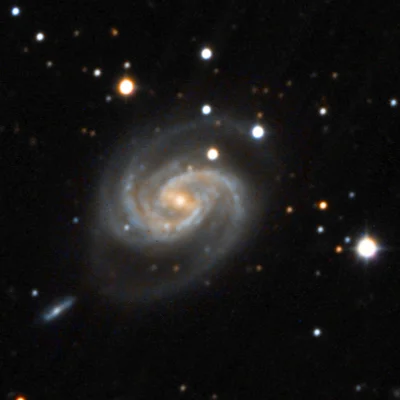
| NGC 759 | 01 57 50.3 | +36 20 35 | Gx (E0) | 13.8 | 12.7 | 1.1 | 13.5 | 1.4 × 1.4 | 0.015567 | 65.75 | 71.000 | Cl, vS, R | GC 5202; UGC 1440; MCG 6-5-67; CGCG 522-87; IRAS 01548+3605 |
Finder Chart
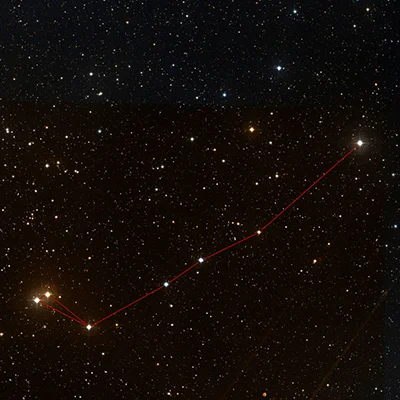
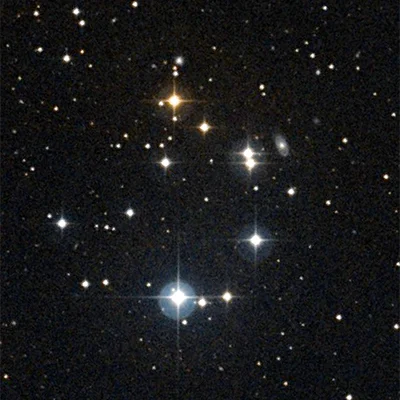
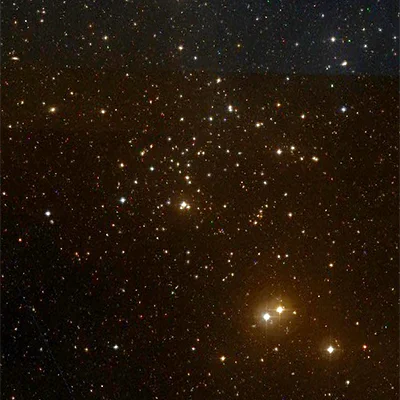
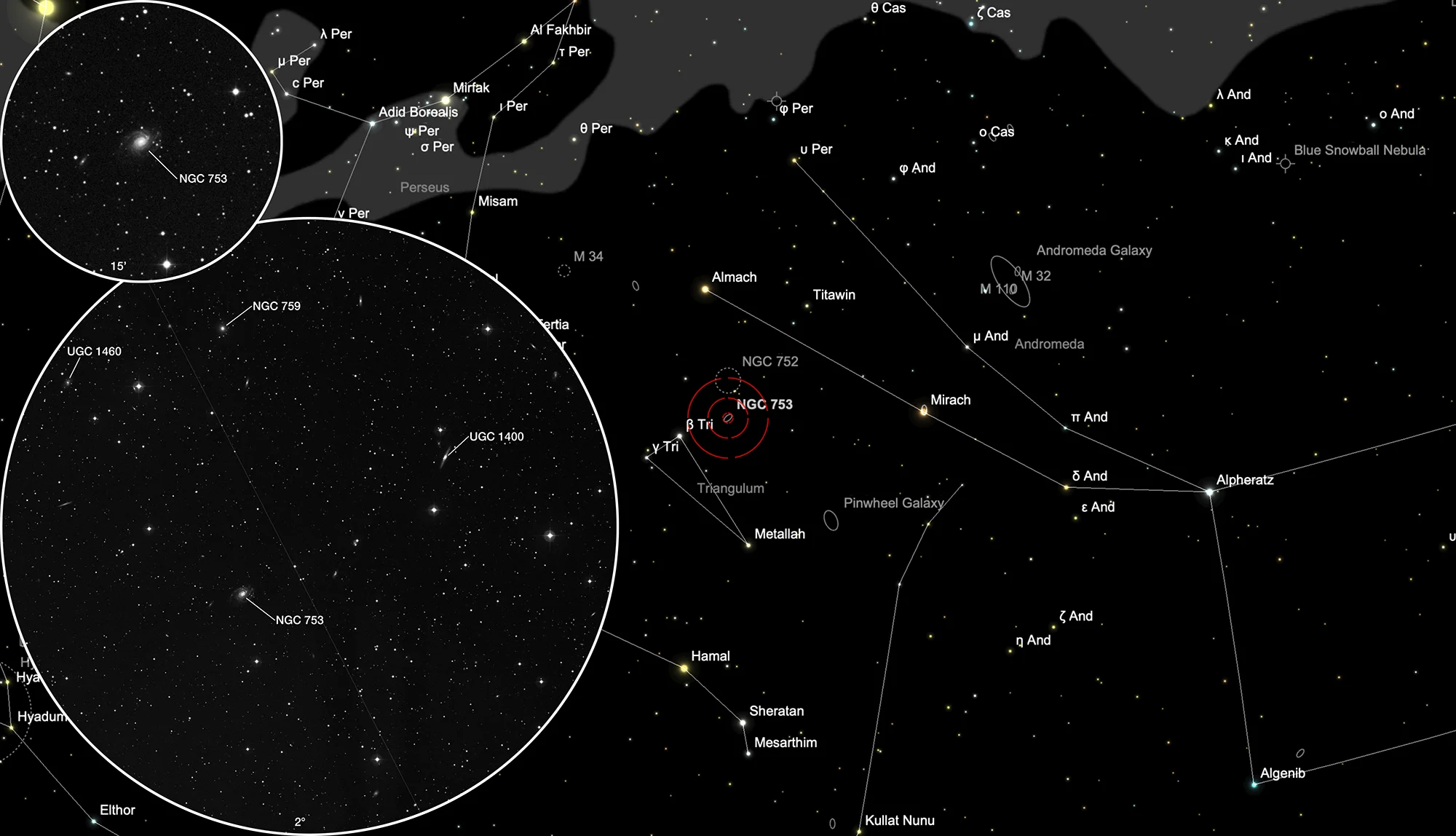
The galaxies NGC 753 and NGC 759 can be found in the constellation Andromeda, approximately 2° south of the open cluster ngc752). On 25 October these are in opposition to the Sun and crosses the meridian at local midnight.
Visual Observation
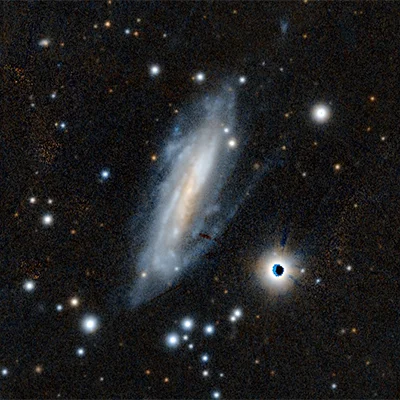
400 mm Aperture: NGC 753: In the 21 mm Ethos eyepiece (85×), this galaxy appears as a small, featureless, oval smudge that is easy to overlook. In the 13 mm Ethos eyepiece (138×), the galaxy is somewhat easier to discern, and the nucleus can also be made out, but it still remains featureless and oval. NGC 759: This galaxy is an even smaller speck and fainter than NGC 753. UGC 1400: At first glance, at low magnification (21 mm Ethos, 85×), the galaxy is not even recognizable as such, since it has a very bright nucleus and can be mistaken for a star. It lies roughly one-third of the way between two 10th-magnitude stars, the southern one of which is a double star with a reddish color (HD 11761, AG 25, separation 5.5"). In the 13 mm Ethos eyepiece (138×), the reddish color of the double star becomes more pronounced. With averted vision, one gets the impression that the galaxy UGC 1400 has an elongated extension, although this may simply be a case of seeing what one hopes to see. UGC 1460: The nucleus occasionally flashes into view with averted vision. — 400 mm f/4.5 Taurus Dobsonian, Falera, 11. 9. 2026, 23:30, SQM-L 21.2, little windy, Bernd Nies