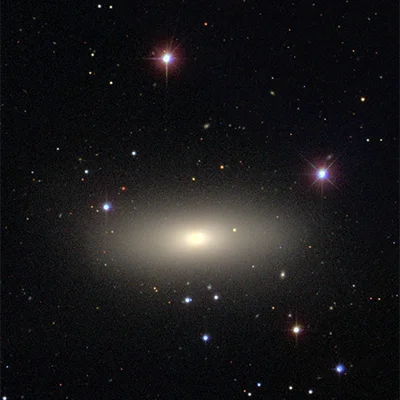
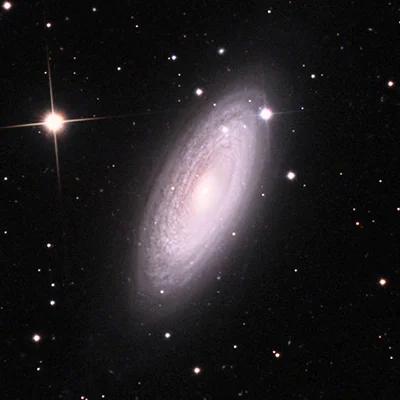
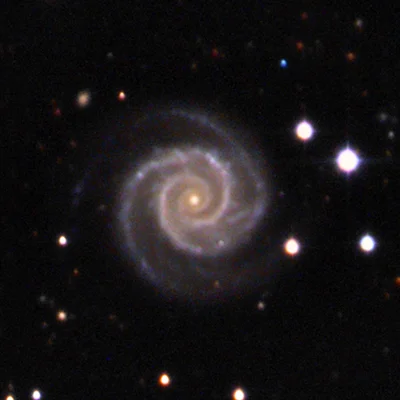
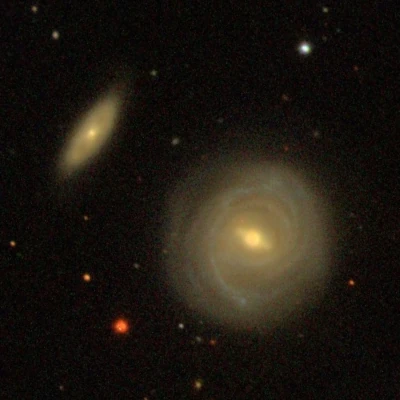
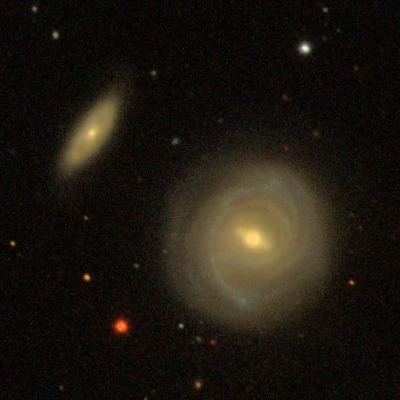
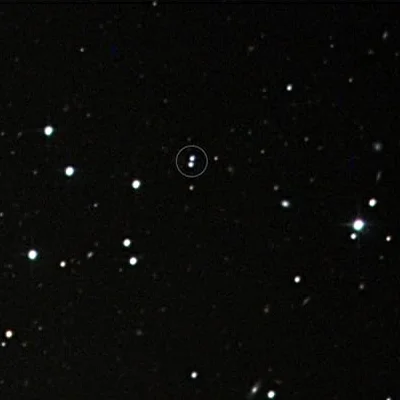
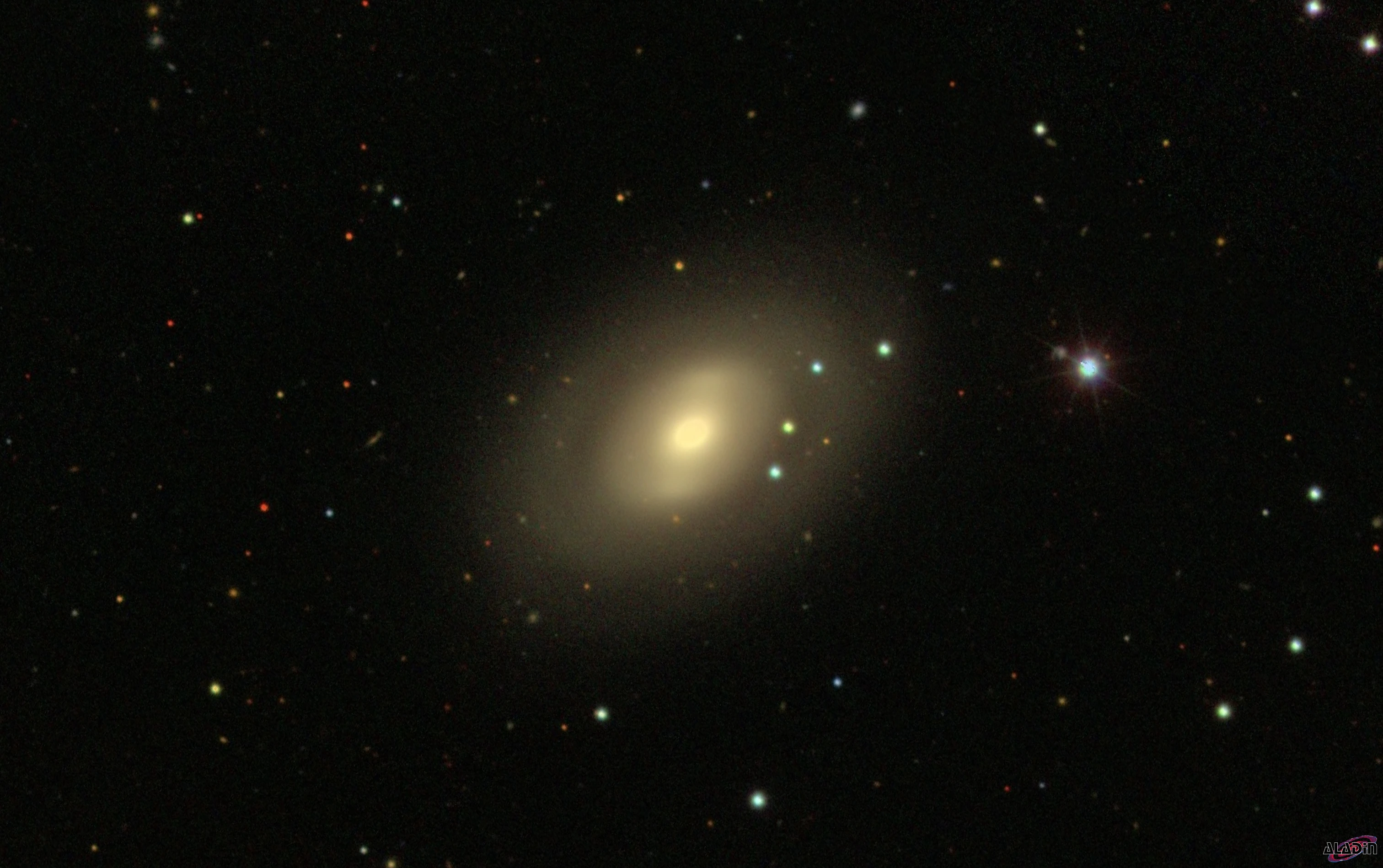
Galaxy NGC 2950
History
This galaxy was discovered by William Herschel on 19 March 1790 using his 18.3-inch reflecting telescope. He listed it as fourth class: planetary nebulae, stars with burs, with milky chevelures, with short rays, remarkable shapes, etc. using the designation IV 68: He noted: «Very bright, small, exactly round, bright nucleus in the middle, very faint cheveulure very gradually joining to the north. In a lower situation the chevelure might not be visible, and this nebula would then appear like an ill defined planetary one.» [465]
His son John observed the nebula twice and listed it as h 616: For sweep 323 (9 February 1831) he noted: «Small, round, very suddenly very much brighter in the middle, yet not to a nucleus.» For sweep 404 (13 April 1831) he noted: «pretty bright; round; suddenly much brighter in the middle; almost to a star. Has a star 11m 20.0s preceding and 15 or 20" north. Right ascension very precarious.» [466]
Physical Properties
| Designation | NGC 2950 |
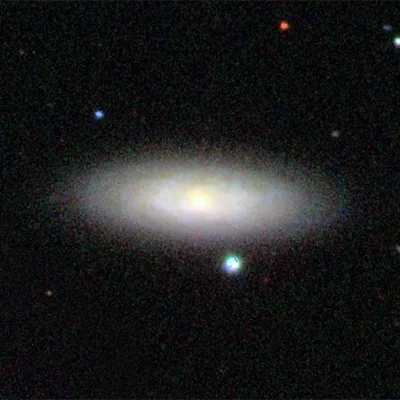
| Type | Gx (SB0) |
| Right Ascension (J2000.0) | 09h 42m 34.8s |
| Declination (J2000.0) | +58° 51' 05" |
| Diameter | 2.7 × 1.8 arcmin |
| Photographic (blue) magnitude | 11.8 mag |
| Visual magnitude | 10.9 mag |
| Surface brightness | 12.5 mag·arcmin-2 |
| Position Angle | 145° |
| Redshift (z) | 0.004460 |
| Distance derived from z | 18.84 Mpc |
| Metric Distance | 19.100 Mpc |
| Dreyer Description | B, pS, R, vgvmbMN |
| Identification, Remarks | WH IV 68; h 616; GC 1888; UGC 5176; MCG 10-14-32; CGCG 289-16 |
Finder Chart
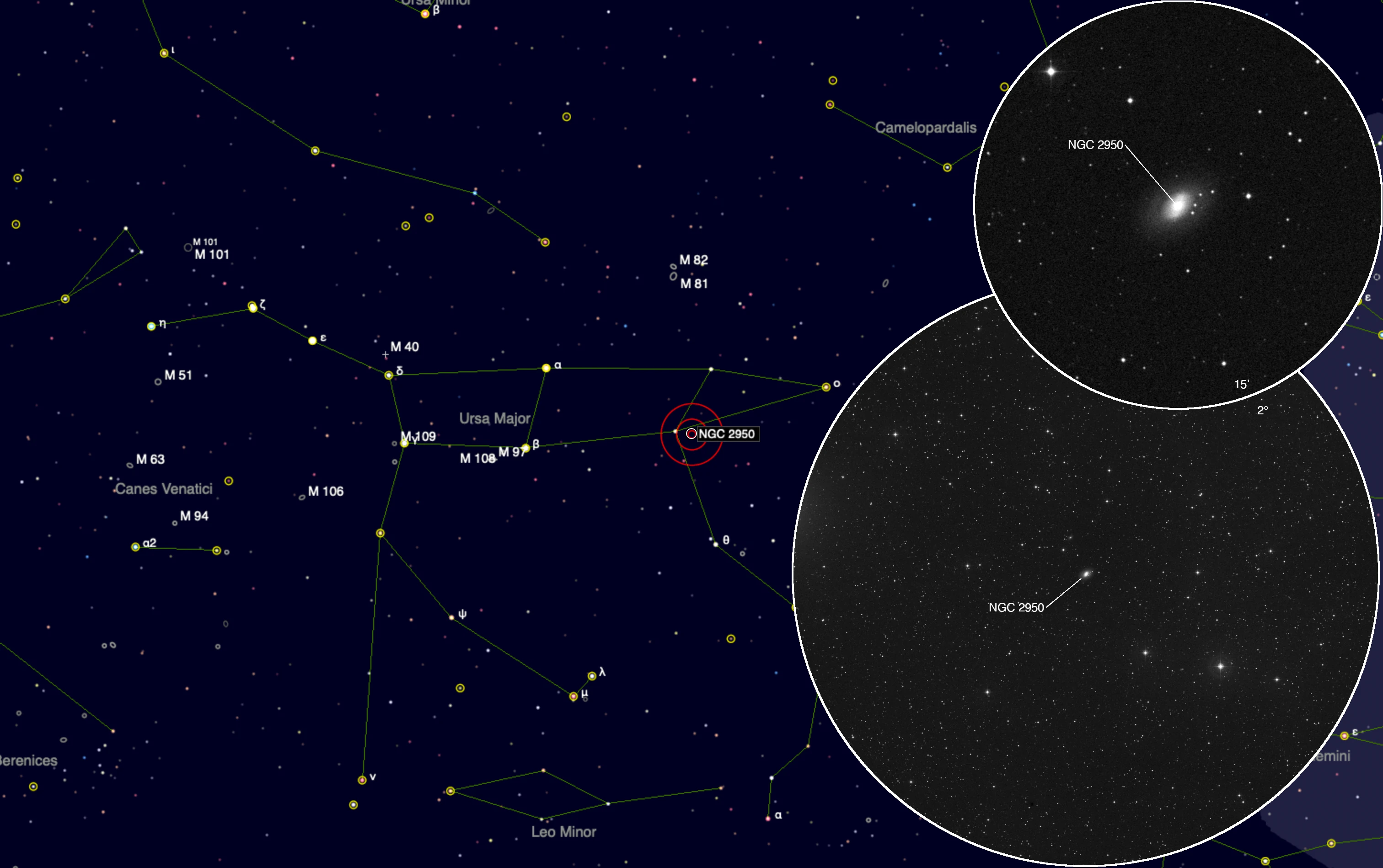
The galaxy NGC 2950 is located in the constellation Ursa Maior. On 13 February it is in opposition with the Sun and is therefore highest in the sky at local midnight.